
Defenders With Over 60 Combined Years Of Experience
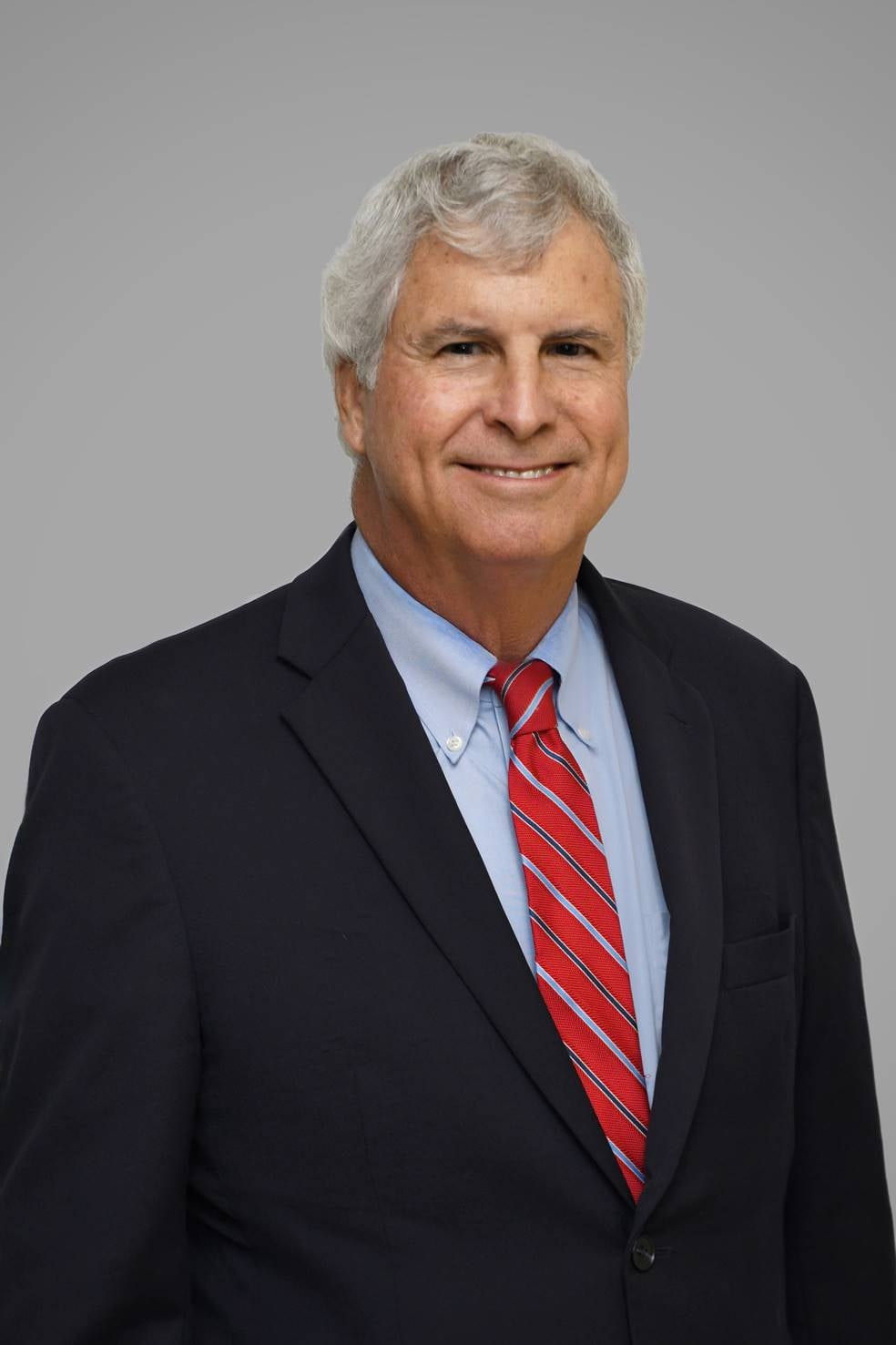
Biography
Warren W. Lindsey is a Florida Bar Board-Certified Criminal Trial Lawyer and one of Central Florida’s most respected criminal defense attorneys. He is admitted to practice before the U.S. Supreme Court, the U.S. Court of Appeals for the Eleventh Circuit, the U.S. District Court for the Middle District of Florida, and all Florida state courts. Mr. Lindsey has practiced law continuously in Central Florida since 1980, following his graduation from the University of Florida College of Law, where he graduated cum laude and with honors.
Mr. Lindsey represents clients in a wide range of criminal matters, including felony, misdemeanor, and traffic offenses, and is frequently retained to represent lawyers and licensed professionals in disciplinary proceedings before The Florida Bar and the Department of Business and Professional Regulation (DBPR).
Honors & Recognition
Mr. Lindsey’s excellence in criminal defense has been repeatedly recognized by his peers and independent legal organizations. He has been named Orlando Magazine’s “Lawyer of the Year” (Criminal Defense – Non-White Collar) and has been selected as one of Orlando Magazine’s Best Lawyers an extraordinary fourteen (14) times since 2010. He has also been recognized in The Best Lawyers in America® continuously since 2009.
Additional honors include:
- Florida Trend’s Florida Legal Elite (2013–2022; including designation as a leading Criminal Law attorney)
- Florida Super Lawyers (2009–2026)
- AV Preeminent® Rating by Martindale-Hubbell (highest rating for legal ability and ethics)
- Client Champion Award, recognizing exceptional ethics and client service
- AVVO Rating: 10.0 (Top Attorney – Criminal Defense)
These distinctions reflect the high level of professional respect Mr. Lindsey has earned among judges, fellow attorneys, and clients alike.
Leadership & Bar Service Mr. Lindsey has devoted decades of service to leadership roles within both state and local bar organizations. He previously served two separate terms on The Florida Bar Board of Governors and was elected President of The Florida Bar Young Lawyers Division. His service to The Florida Bar includes leadership and committee roles involving criminal procedure, disciplinary rules, legislation, and continuing legal education.
At the local level, Mr. Lindsey served as President of the Orange County Bar Association, following years of service on its Executive Council and as Chair of multiple committees, including Criminal Law, Judicial Relations, and Fee Arbitration. He also served as President of the Orange County Bar Association Foundation.
Mr. Lindsey is a past President of the Central Florida Association of Criminal Defense Lawyers and has served on its Board of Directors. He is also an active member of the Florida Association of Criminal Defense Lawyers and the National Association of Criminal Defense Lawyers, including service on legislative committees.
Beyond bar leadership, Mr. Lindsey is a former President of the Seminole County Legal Aid Society, a graduate of Leadership Orlando, and a graduate of Leadership Winter Park. He also served on the Grievance Committee for the U.S. District Court, Middle District of Florida.
Notable Cases:
United States v. Davis, 666 F.2d 195 (5th Cir. Unit B 1982)
The government tried the case in the wrong state, and the Fifth Circuit said so.
Federal agents built a drug conspiracy case out of Macon, Georgia. The problem was that the drugs themselves never touched Georgia soil. They sat in Florida until the buyers drove down to get them, and the exchange happened at a Holiday Inn in Sanford. Prosecutors charged the entire case in Georgia anyway, arguing that the deal was arranged there and the drugs were headed back there.
Warren Lindsey, then with Muller & Kirkconnell in Winter Park, argued that the possession charge simply did not belong in a Georgia courtroom. The Fifth Circuit agreed and reversed that conviction, holding that the government had to prove his clients actually or constructively possessed the drugs inside the trial district, and that accepting the government's theory would undermine the Article III and Sixth Amendment guarantee of trial where the crime was committed.
Why it matters: Venue sounds technical until it is your family being flown to another state to face a jury. This published opinion is still cited today in federal venue fights, including in briefing before the U.S. Supreme Court.
Source: Justia, 666 F.2d 195
Hansbrough v. State, 509 So. 2d 1081 (Fla. 1987)
The jury said life. The judge said death. The Florida Supreme Court said the jury was right.
A jury convicted Kirk Hansbrough of first degree felony murder and recommended a life sentence. The trial judge overrode that recommendation and imposed death, finding four aggravating circumstances.
On direct appeal to the Florida Supreme Court, Warren Lindsey and Chandler Muller attacked those aggravating factors one by one. The Court threw out two of them, holding that the evidence did not show the dominant motive was eliminating a witness, and that a frenzied stabbing was not the "cold, calculated, and premeditated" conduct that factor is reserved for. With only two valid aggravators left, the override failed the Tedder standard, and the Court vacated the death sentence and directed the trial court to impose life. It also struck four of the trial court's seven reasons for departing upward on the armed robbery sentence.
Why it matters: A client walked off death row. Nearly four decades later, courts and litigants still cite this opinion when arguing what does and does not qualify as a cold and calculated killing.
Source: Justia, 509 So. 2d 1081
State v. Tirohn, 556 So. 2d 447 (Fla. 5th DCA 1990)
Part of a Florida criminal statute knocked out as unconstitutional.
Florida's early child pornography possession law defined "sexual conduct" so loosely that, read literally, it criminalized things no one intended to criminalize. The argument raised was that the statute would reach a photograph of a father bathing his son, two clothed children hugging closely enough to touch, or a junior high coach giving a congratulatory smack on the backside to a fully uniformed football player. Warren Lindsey and David Henson represented Tirohn.
The Fifth District agreed those examples showed the overbroad nature of a portion of section 827.071(1)(g), and it severed the offending language rather than voiding the whole statute.
Why it matters: Getting a piece of a criminal statute declared unconstitutional is rare air for any defense lawyer. The ruling also created a conflict with the Fourth District that the Florida Supreme Court had to resolve in Schmitt v. State. The Legislature later repaired the overbreadth problem by adding intent language.
Source: Schmitt v. State, 590 So. 2d 404 (Fla. 1991), discussing Tirohn
Rewriting Florida's Speedy Trial Rule (2025)
Not a case. A rule change that touches every criminal case in the state.
Warren Lindsey served as Chair of the Speedy Trial Subcommittee of the Criminal Law Section of The Florida Bar during the Florida Supreme Court proceedings that produced the 2025 overhaul of Florida Rule of Criminal Procedure 3.191. The Court issued its decision on March 13, 2025, in Case No. SC2022-1123, by a 6 to 1 vote with Justice Labarga dissenting. The amendments took effect July 1, 2025 at 12:01 a.m.
What changed:
- The speedy trial clock now starts when formal charges are filed, not when you are arrested.
- The recapture period grew from 10 days to 30 days and is now mandatory in every situation.
- After a demand for speedy trial, trial is set 5 to 60 days after calendar call, up from 5 to 45 days.
- Dismissals under the rule are now without prejudice unless the court finds a constitutional speedy trial violation.
- A companion change set a 60 day deadline for the State to formally charge a defendant who is on pretrial release.
Why it matters: Rules like this get rewritten roughly once a generation. When the Florida Supreme Court reworked the deadline that governs every criminal prosecution in the state, a lawyer from this firm was chairing the Bar subcommittee at the center of it.
Source: Florida Supreme Court opinion, SC2022-1123
Disclaimer* The case summaries on this page are provided for general informational purposes only and do not constitute legal advice. Reading this page does not create an attorney-client relationship with Lindsey, Ferry & Parker, P.A. Every case turns on its own facts, and past results do not guarantee or predict a similar outcome in any future matter. If you are facing criminal charges, please consult a licensed attorney about your specific situation.
Practice Areas
- Criminal defense
Education
- University of Florida College of Law, Gainesville, Florida
- Doctor of Jurisprudence - 1979
- Honors: Cum Laude
- Honors: With Honors
- Stetson University, DeLand, Florida
- Bachelor of Arts - 1977
- Honors: cum laude
Bar Admissions
- Florida, 1980
- U.S. District Court Middle District of Florida
- U.S. Court of Appeals 11th Circuit
- U.S. Supreme Court
Certified Legal Specialties
- Board-Certified Criminal Trial Lawyer, The Florida Bar